Tips & Optimizations

Tips & Optimizations

History

30 May 1967

A Century of Solitude and Storytelling

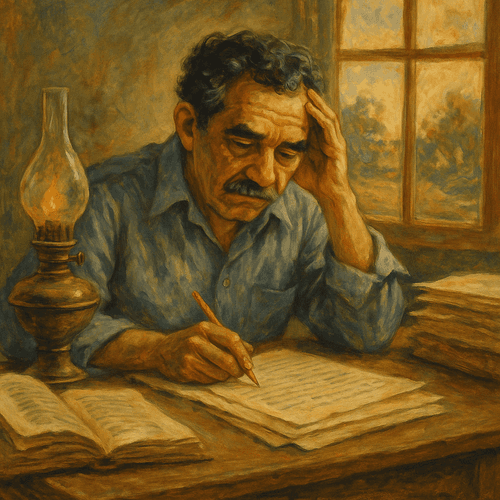
Gabriel García Márquez’s One Hundred Years of Solitude was first published in Argentina on May 30, 1967, marking a transformative moment in world literature. With its epic tale of the Buendía family and the town of Macondo, the novel introduced millions of readers to the literary style known as Magical Realism. Márquez’s blending of the extraordinary with the everyday not only revolutionized Latin American literature but also reshaped global storytelling for generations to come. The Birth of a Masterpiece Gabriel García Márquez had been working as a journalist and struggling writer when he secluded himself for 18 months to write One Hundred Years of Solitude. With his family in debt and finances tight, he poured everything into the novel, drawing inspiration from the oral histories of his Colombian hometown and the turbulent political and cultural shifts in Latin America. The result was a sprawling, poetic, and layered novel that defied conventional narrative norms. The novel tells the story of seven generations of the Buendía family, whose fate mirrors the rise and fall of the fictional town of Macondo. With elements of fantasy, mysticism, and folklore woven into a very real socio-political backdrop, García Márquez crafted something entirely new. It captivated readers from the very first sentence and gained instant acclaim, especially among Spanish-speaking audiences eager for a fresh and resonant voice. A Movement Called Magical Realism Though not the first to use elements of the fantastic in fiction, García Márquez became the poster figure for Magical Realism—an artistic style that blends magical elements into realistic settings, treating the supernatural as part of everyday life. In One Hundred Years of Solitude, characters ascend to heaven, ghosts walk among the living, and time loops back on itself—all described with the same matter-of-fact tone as more mundane events. This literary innovation helped Latin American authors break away from Eurocentric storytelling traditions and gave voice to a distinctly Latin American experience—one where myth, history, politics, and family are all entwined. Writers such as Isabel Allende, Mario Vargas Llosa, and Salman Rushdie would carry the style forward, making it one of the most significant literary movements of the 20th century. Global Legacy and Lasting Impact The success of One Hundred Years of Solitude helped usher in the "Latin American Boom" of the 1960s and ’70s, during which writers from the region gained unprecedented international attention. García Márquez would go on to receive the Nobel Prize in Literature in 1982, with the Swedish Academy praising his "richly composed world of imagination" rooted in "the life and conflicts of a continent." More than five decades later, the novel continues to resonate. It’s studied in universities, translated into more than 40 languages, and remains one of the most beloved works of fiction ever published. Its influence extends beyond literature into film, art, and even politics, as it remains a powerful exploration of memory, history, and the cyclical nature of human experience.

Tips & Optimizations

History

15 September 2024

A Continent Breaks Free: Central America's Independence Revolution

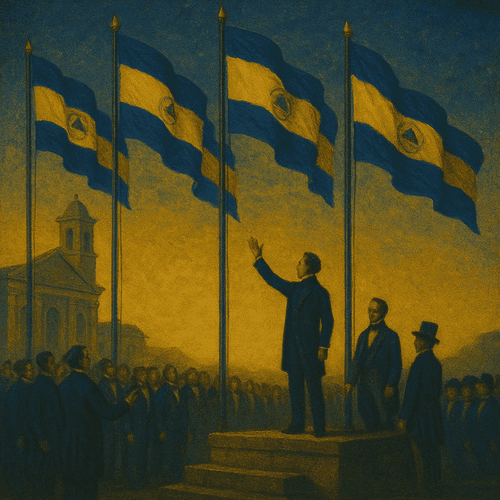
On September 15, 1821, five Central American nations—Costa Rica, El Salvador, Guatemala, Honduras, and Nicaragua—simultaneously declared their independence from Spanish colonial rule, inspired and enabled by Agustín de Iturbide's successful Mexican independence movement that had demonstrated the possibility of breaking free from centuries of Spanish domination. This remarkable coordinated liberation represented one of the most significant anti-colonial achievements in Latin American history, as an entire region threw off imperial control in a single day and established the foundation for independent nation-states that would shape Central American politics for centuries. The independence declaration marked the end of 300 years of Spanish colonial rule and initiated a complex process of nation-building that would challenge these new republics to create democratic institutions, develop economic systems, and establish their place in the emerging post-colonial world of the early 19th century. Following Mexico's Revolutionary Example The success of Iturbide's Plan de Iguala in securing Mexican independence provided both inspiration and practical demonstration that Spanish colonial authority could be successfully challenged and overthrown through coordinated political and military action. Central American leaders, many of whom had been monitoring developments in Mexico closely, recognized that the collapse of effective Spanish control in Mexico had created an opportunity for their own independence movements to succeed with minimal bloodshed and maximum legitimacy. The Captaincy General of Guatemala, which encompassed all five future independent nations, had been experiencing growing tensions between Spanish colonial authorities and local creole elites who sought greater autonomy and economic freedom from mercantilist restrictions that favored Spanish merchants over local interests. The weakness of Spanish military forces in the region and the encouraging example of successful independence movements throughout Latin America convinced Central American leaders that the time was favorable for their own liberation struggle. A Coordinated Declaration of Freedom The September 15 independence declaration was orchestrated primarily by Guatemalan leaders who recognized that coordinated action across the entire Captaincy General would provide greater legitimacy and security than individual national movements that might be more easily suppressed by Spanish authorities. The declaration was formally announced in Guatemala City and quickly endorsed by local authorities in the other four provinces, creating a unified front that made Spanish reconquest virtually impossible given the limited military resources available to colonial administrators. The peaceful nature of Central American independence, achieved through political negotiation rather than prolonged military conflict, distinguished it from many other Latin American independence movements and allowed the new nations to avoid the devastating wars that had characterized independence struggles in other regions. This relatively smooth transition enabled Central American leaders to focus immediately on the challenges of creating new governmental institutions and establishing diplomatic relations with other newly independent Latin American republics. The Birth of New Nations The 1821 independence declaration established the foundation for five sovereign Central American republics, though the immediate aftermath was complicated by debates over whether the region should remain unified, join the Mexican Empire under Iturbide, or develop as separate independent nations. The initial decision to form the Federal Republic of Central America reflected leaders' recognition that cooperation would provide greater security and economic viability than complete fragmentation, though this federal experiment would ultimately fail due to regional rivalries and conflicting national interests. The long-term legacy of September 15, 1821, extends far beyond the immediate achievement of independence to encompass the ongoing development of Central American national identities, democratic traditions, and regional cooperation efforts that continue to influence contemporary politics and international relations. The successful coordination of independence across five different territories demonstrated the possibility of peaceful decolonization and established precedents for regional cooperation that would inspire future generations of Central American leaders seeking to address common challenges through collective action rather than isolated national efforts.
logo
  • Introduction

  • Lessons From The Past

  • Cultural Awareness and Diversity

  • Appreciation for Progress

  • Understanding Political and Social Dynamics

  • Preserving Cultural Heritage

  • Conclusion

Terms and ConditionsDo Not Sell or Share My Personal InformationPrivacy PolicyPrivacy NoticeAccessibility NoticeUnsubscribe
Copyright © 2026 Day In History