History

History

16 August 1969

Three Days That Defined a Generation: Woodstock Opens

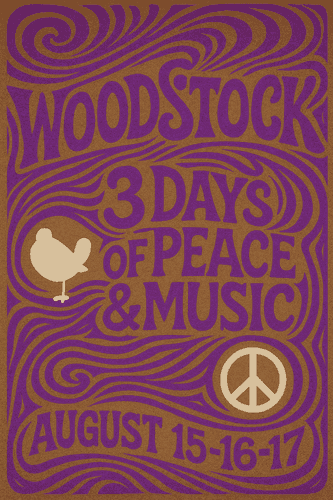
On August 15, 1969, the Woodstock Music & Art Fair officially opened on Max Yasgur's 600-acre dairy farm in Bethel, New York, launching what would become the most legendary music festival in history. Originally planned as a commercial venture to showcase popular music and make a profit, Woodstock quickly transformed into something far more significant—a spontaneous gathering of nearly 500,000 young people who created a temporary city built on music, peace, and countercultural ideals. The festival, conceived by four young entrepreneurs as "An Aquarian Exposition: 3 Days of Peace & Music," became an iconic symbol of the 1960s counterculture movement and a defining moment for an entire generation seeking alternatives to mainstream American society. What was supposed to be a ticketed event for 50,000 people became a free festival when the massive crowds overwhelmed security and infrastructure, creating both logistical nightmares and an atmosphere of unprecedented communal sharing and cooperation. From Business Plan to Cultural Revolution The festival was born from the entrepreneurial ambitions of Michael Lang, Artie Kornfeld, Joel Rosenman, and John Roberts, who initially envisioned a profitable venture featuring popular rock acts. However, as the event grew beyond their wildest expectations, it evolved into something that transcended commercial entertainment. The massive influx of attendees—far exceeding all projections—created a temporary autonomous zone where conventional rules of commerce and social behavior were suspended in favor of communal values and shared experience. The organizers' original vision of a controlled, ticketed event gave way to the reality of a massive gathering that functioned more like a spontaneous city than a traditional concert, complete with food shortages, traffic jams stretching for miles, and a sense of collective adventure that united hundreds of thousands of strangers. Music as the Universal Language The festival featured performances by some of the era's most influential artists, including Jimi Hendrix, Janis Joplin, The Who, Santana, and Crosby, Stills, Nash & Young, among many others. These performances took place against a backdrop of social and political upheaval, with the Vietnam War raging and the civil rights movement challenging American society. The music provided a soundtrack for a generation's hopes and frustrations, while the festival itself demonstrated that young people could create an alternative society based on peace, love, and music. A Moment of Unity in Turbulent Times Despite inadequate facilities, food shortages, muddy conditions, and logistical chaos, Woodstock became renowned for the cooperative spirit and peaceful behavior of its attendees. In an era marked by violent protests, assassinations, and social division, the festival offered a brief glimpse of the harmony and community that the counterculture movement aspired to achieve. The fact that such a massive gathering occurred with minimal violence or serious incident became part of Woodstock's legendary status, proving that the idealistic dreams of the 1960s could, at least temporarily, become reality.

Money

History

23 October 2001

1,000 Songs in Your Pocket: The iPod Revolutionizes Music

On October 23, 2001, Apple Inc. unveiled the iPod, a revolutionary portable media player that would fundamentally transform how people consumed, stored, and thought about music. Introduced at a special event at Apple's Cupertino headquarters, the first-generation iPod featured a 5GB hard drive capable of storing approximately 1,000 songs, a sleek white design with signature click wheel navigation, and seamless integration with Apple's iTunes software. The device's tagline "1,000 songs in your pocket" captured both its technical capability and cultural promise, offering music lovers unprecedented portability and storage capacity that rendered traditional CD players and even early MP3 players obsolete. This iconic device would rescue Apple from near-bankruptcy, establish new paradigms for digital music consumption, and create the foundation for the company's transformation into the world's most valuable technology company... Birth of a Game-Changer The iPod emerged from Apple's recognition that existing MP3 players suffered from poor design, limited storage, and complicated user interfaces that frustrated consumers seeking digital music solutions. Under the leadership of CEO Steve Jobs, Apple's engineering teams combined cutting-edge hard drive technology from Toshiba with elegant industrial design and intuitive software to create a product that prioritized user experience over technical specifications. The iconic click wheel, designed by Apple's Phil Schiller, provided effortless navigation through large music libraries, eliminating the frustrating button-pushing that characterized competing devices. The iPod's development represented a calculated risk for Apple, which had focused primarily on computers and was entering the consumer electronics market at a time when the company's survival remained uncertain. Jobs understood that success required not just superior hardware, but an integrated ecosystem that made acquiring, organizing, and playing digital music as simple as possible. This insight led to the development of the iTunes Store, launched in 2003, which provided legal, easy access to digital music that complemented the iPod's technical capabilities.  Cultural Phenomenon and Industry Disruption The iPod quickly transcended its status as mere electronic device to become a cultural icon and fashion statement, with its distinctive white earbuds becoming instantly recognizable symbols of digital music consumption. Apple's marketing emphasized the iPod's role in personal identity and lifestyle, using silhouette advertisements that made the device itself the star while suggesting that music was an essential component of modern life. This approach attracted consumers who might have been intimidated by technology but recognized the iPod as both functional tool and status symbol. The device's impact on the music industry proved profound and irreversible, accelerating the shift from physical media to digital distribution that had begun with file-sharing services like Napster. The iTunes Store provided record labels with a legal alternative to piracy while giving consumers convenient access to individual songs rather than forcing them to purchase entire albums. This transformation empowered listeners while disrupting traditional music industry business models, ultimately changing how artists released music and how consumers discovered new sounds. Foundation for Apple's Digital Empire The iPod's overwhelming success established Apple as a leader in consumer electronics and validated the company's strategy of creating integrated hardware, software, and services ecosystems. Revenue from iPod sales provided the financial stability that enabled Apple to develop the iPhone, iPad, and other revolutionary products that would define 21st-century technology. The device demonstrated that superior design and user experience could command premium prices and generate customer loyalty that transcended typical brand relationships. The iPod's legacy extends far beyond its direct impact on music consumption to influence how people think about portable electronics, digital media, and the role of design in technology products. While streaming services and smartphones eventually rendered standalone music players obsolete, the iPod established principles of elegant design, intuitive interfaces, and ecosystem integration that continue to guide technology development today. The device transformed Apple from a struggling computer company into a cultural force that shapes how billions of people interact with technology, communicate, and consume entertainment.

Road Trips

History

27 June 1985

End of the Mother Road: Route 66 Removed from the Highway System

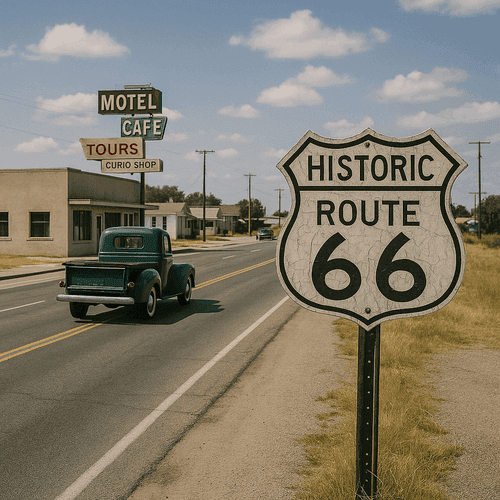
On June 27, 1985, the U.S. government officially removed Route 66 from the federal highway system, signaling the end of an era for what was once the most famous road in America. Spanning over 2,400 miles from Chicago to Los Angeles, Route 66 had long been a vital artery for migration, commerce, and culture. Its decertification marked a turning point in American transportation history and ignited a movement to preserve the spirit of the road through tourism, nostalgia, and historical restoration. A Road That Defined a Nation Established in 1926, Route 66 quickly earned the nickname “Main Street of America.” It became a symbol of freedom and opportunity, especially during the Great Depression and Dust Bowl era, when thousands of displaced families traveled west in search of work and a better life. The route passed through eight states, bringing commerce and connection to countless small towns along the way. It served as a lifeline for rural America, creating jobs, fostering business, and knitting the country together through a shared infrastructure. Route 66 was more than a road; it became a cultural icon. Popularized by John Steinbeck’s The Grapes of Wrath, Bobby Troup’s song “(Get Your Kicks on) Route 66,” and a 1960s television series, it captured the imagination of generations and symbolized the American dream of mobility and exploration. The Interstate Takes Over By the 1950s and ’60s, the Interstate Highway System had begun to replace older roads like Route 66 with faster, more direct alternatives. The Federal-Aid Highway Act of 1956 funded thousands of miles of limited-access freeways, making long-distance travel quicker and safer. As interstates bypassed towns and cities, Route 66 was gradually fragmented and decommissioned. Roadside diners, motels, and gas stations that had flourished during its heyday began to shutter as traffic diminished and economic lifelines disappeared. When the final stretches of Route 66 were decertified in 1985, it wasn’t just the end of a federal route. It was a farewell to a slower-paced, community-centered way of traveling—one where people stopped, lingered, and explored along the way. The Legacy and Revival of Route 66 Despite its removal from the official highway system, Route 66 was too deeply woven into American memory to vanish. Grassroots campaigns led to the installation of “Historic Route 66” signs, and sections of the old road were preserved or repurposed as scenic byways. Today, the road has become a pilgrimage for nostalgia-seekers and international tourists alike. Annual festivals, vintage car rallies, and roadside attractions help keep the route’s spirit alive while contributing to local economies once again. The legacy of Route 66 remains enduring. It stands as a symbol of resilience and reinvention, a reminder of an era when the road itself was an adventure—and when getting there was half the fun.

Road Trips

History

16 April 1943

The Accidental Trip That Changed Science

On this day in history, Swiss chemist Albert Hofmann accidentally discovers the hallucinogenic effects of LSD (lysergic acid diethylamide) while working at Sandoz Laboratories in Basel, Switzerland. This serendipitous discovery would lead to further research into the psychedelic properties of LSD and its impact on psychology, neuroscience, and counterculture movements in the decades to come. A Glimpse Into the Unknown LSD-25 was first synthesized by Hofmann in 1938, intended as part of a search for new pharmaceutical compounds derived from ergot fungus. At the time, it showed little promise and was shelved. But Hofmann felt an inexplicable urge to revisit the compound five years later. While working in the lab on April 16, 1943, he accidentally absorbed a small amount through his fingertips—and began to feel strangely euphoric, dizzy, and perceptually altered. Alarmed and unsure of what was happening, Hofmann left work early. As the sensations intensified, he experienced a surreal enhancement of colors, patterns, and thoughts. Though brief, the episode was powerful. Upon reviewing the day’s events, Hofmann hypothesized that LSD-25 might be the cause. This moment of realization would transform an obscure lab compound into one of the most profound scientific curiosities of the 20th century. A Bicycle Ride Through Consciousness Three days later, Hofmann decided to ingest 250 micrograms of LSD to confirm its effects intentionally. He underestimated the dosage—250 micrograms turned out to be a massive amount. Hofmann asked his lab assistant to escort him home as the compound took effect. They traveled by bicycle through the streets of Basel, during which Hofmann experienced vivid hallucinations, distorted time, and intense introspection. This ride, now dubbed “Bicycle Day,” would become a cultural touchstone in psychedelic history. Despite the overwhelming nature of the trip, Hofmann found the experience spiritually and intellectually stimulating. He described it as a shift in consciousness, not a mere hallucination. His notes emphasized how LSD seemed to open new dimensions of perception and understanding. These reflections led to a wave of research into psychedelics as therapeutic tools, marking the beginning of LSD’s journey through science, society, and beyond. A Psychedelic Renaissance In the 1950s and 60s, Sandoz Laboratories distributed LSD to researchers under the name Delysid. Psychiatrists explored its effects in treating anxiety, trauma, addiction, and depression. Its ability to dissolve psychological boundaries fascinated clinicians and artists alike. At its peak, LSD was part of over a thousand clinical studies and trials, many of which reported promising, if not fully understood, results. The cultural momentum around LSD grew rapidly, and by the mid-1960s it had spilled beyond the laboratory into music, art, and protest movements. It was championed as a mind-expanding force by public figures like Timothy Leary and counterculture icons across the globe. But this notoriety drew government scrutiny. By the end of the 1960s, LSD was criminalized in most countries, bringing its mainstream scientific use to a halt for decades. Albert Hofmann, who lived to be 102, never wavered in his belief that LSD had immense scientific and spiritual value. He was disappointed by how it had been sensationalized and banned, calling it a “problem child” of science. Nevertheless, he remained optimistic that the world would one day return to studying the compound with the respect and structure it deserved. That future may now be unfolding. In recent years, a resurgence of interest in psychedelics—guided by new safety protocols and modern neuroscience—has sparked a revival in research. Clinical trials are once again exploring LSD’s therapeutic potential. From an accidental exposure in a Swiss lab to its rebirth as a tool in mental health treatment, Hofmann’s discovery continues to reshape how we think about the human mind.

History

08 February 1910

The Birth of the Boy Scouts of America: A Legacy of Leadership and Service

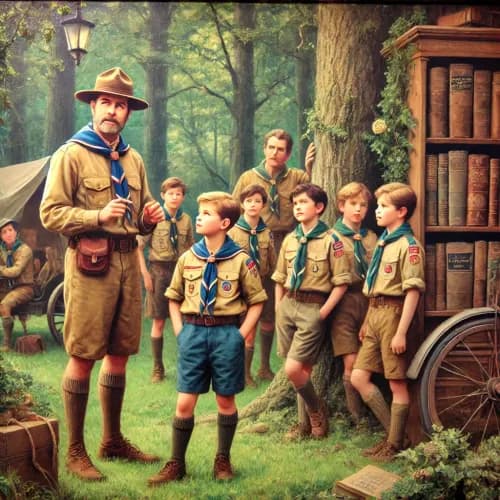
A significant organization promoting character development and outdoor skills for young people was founded on February 8, 1910. The Boy Scouts of America (BSA) has since become one of the largest youth organizations in the United States, influencing generations of young men through leadership training, community service, and outdoor education. More than a century later, its values and traditions continue to shape the lives of millions. A Movement for Character and Adventure The Boy Scouts of America was inspired by the scouting movement that began in England in 1908 under the leadership of Robert Baden-Powell, a British military officer. His book, Scouting for Boys, encouraged outdoor skills, survival techniques, and strong moral values. In the United States, the movement was championed by Chicago publisher William D. Boyce, who, according to legend, was guided through a London fog by an anonymous Boy Scout performing a "Good Turn." Intrigued by the scout’s commitment to service, Boyce brought the movement to America, establishing the BSA with the mission of preparing young men to become responsible citizens. The early years of the BSA saw rapid growth as it gained national recognition. By partnering with organizations such as the YMCA and receiving support from President William Howard Taft, the Boy Scouts quickly became a respected institution. The introduction of a structured rank system, merit badges, and the Scout Oath and Law provided a solid foundation that would guide generations of young men in their personal and civic development. A Tradition of Leadership and Service Since its founding, the BSA has emphasized leadership, teamwork, and community service. Through its merit badge program, scouts develop practical skills ranging from first aid and camping to citizenship and environmental stewardship. The Eagle Scout rank, the organization’s highest achievement, has been earned by notable figures such as astronaut Neil Armstrong, former President Gerald Ford, and filmmaker Steven Spielberg. Earning the rank requires dedication, leadership, and a significant service project, reinforcing the values of hard work and community engagement. Beyond individual achievement, the BSA has played a key role in national service efforts. During World War I and World War II, scouts contributed by selling war bonds, gathering resources, and assisting in civil defense programs. In peacetime, the organization has continued its legacy of service through conservation efforts, disaster relief, and initiatives that promote civic responsibility. Scouts have planted millions of trees, cleaned up parks, and assisted in recovery efforts after natural disasters. A Lasting Impact and Modern Evolution While the Boy Scouts of America has faced challenges over the years, including shifts in membership policies and legal battles, the organization has continually adapted to remain relevant. In 2017, the BSA announced it would welcome girls into its programs, leading to the creation of Scouts BSA in 2019. This change allowed young women to work toward the prestigious Eagle Scout rank, expanding opportunities for leadership and personal growth. Today, the BSA continues to focus on its core mission of preparing young people for life, fostering leadership skills, and instilling a commitment to service. With over 110 years of history, the Boy Scouts of America remains a symbol of character, adventure, and lifelong learning. Though the world has changed since its founding in 1910, the organization’s dedication to helping youth develop into responsible, ethical citizens continues to be as strong as ever.

History

28 January 2024

January 28: An Empire's End, A Service United, and Dreams Shattered

January 28: An Empire's End, A Service United, and Dreams Shattered When a great ruler's death reshaped Europe, guardians merged to protect American waters, and tragedy reminded us that progress demands sacrifice January 28 connects three moments that define leadership, service, and aspiration—when the death of medieval Europe's greatest emperor began the continent's fragmentation, when two maritime services united to create America's coastal guardians, and when seven astronauts perished in full view of a nation that believed spaceflight had become routine. These stories remind us that empires rise and fall with their leaders, that protection requires dedicated institutions, and that humanity's greatest ambitions sometimes exact the highest price. The Emperor Who Forged Europe On January 28, 814, Charlemagne died at his palace in Aachen at approximately age 72, ending a reign that had transformed Western Europe. Charles the Great had ruled the Frankish kingdom for 46 years, conquering vast territories to create an empire stretching from the Pyrenees to the Danube, from the North Sea to Rome. On Christmas Day 800, Pope Leo III crowned him Emperor of the Romans, reviving the Western Roman Empire four centuries after its fall. Charlemagne's empire united most of Western Europe under single rule for the first time since Rome's collapse—a feat not repeated until Napoleon. Yet Charlemagne's legacy extended far beyond military conquest. He championed learning during the Carolingian Renaissance, establishing schools, preserving classical texts, and standardizing writing through Carolingian minuscule—the basis for modern lowercase letters. He reformed currency, law, and Church practices, creating administrative systems that would influence European governance for centuries. His empire fragmented within a generation of his death, divided among his grandsons in the Treaty of Verdun, creating the foundations for modern France, Germany, and Italy. The emperor who died on this day proved that great leaders can reshape civilizations, that military might means little without cultural achievement, and that empires built on one person's genius rarely survive their founder. Charlemagne remains the father of Europe—a ruler whose vision of Christian unity and classical learning created institutions and ideals that outlasted his empire.   The emperor who united Europe and championed learning passes, leaving a legacy that would shape the continent for centuries Guardians of America's Waters On January 28, 1915, President Woodrow Wilson signed legislation merging the Revenue Cutter Service and the United States Life-Saving Service into the United States Coast Guard. The Revenue Cutter Service, founded in 1790 as America's first armed maritime force, had enforced customs laws and prevented smuggling. The Life-Saving Service, established in 1878, operated stations along dangerous coastlines, rescuing mariners from shipwrecks. The merger created a unified force responsible for both law enforcement and humanitarian rescue—a unique combination that defines the Coast Guard's identity. The Coast Guard became America's maritime guardian, enforcing laws, saving lives, and protecting national security. During wartime, it operates under the Navy, serving with distinction from World War I to the present. In peacetime, it interdicts drug smugglers, enforces fishing regulations, maintains navigation aids, conducts search and rescue operations, and responds to maritime disasters like oil spills. Coast Guard cutters patrol icy Alaskan waters and Caribbean drug routes alike, while rescue swimmers leap from helicopters into stormy seas to save lives. The service's motto—Semper Paratus, "Always Ready"—reflects its 24/7 commitment to maritime safety. The Coast Guard created on this day represents a uniquely American approach to maritime security: a force that's simultaneously military and humanitarian, that enforces laws while saving lives, and that recognizes protecting citizens means more than just defending borders—it means being ready to rescue anyone in peril on American waters. Two services merge to create America's maritime guardians, always ready to enforce laws and save lives on the nation's waters ❦ Seventy-Three Seconds On January 28, 1986, Space Shuttle Challenger lifted off from Kennedy Space Center on mission STS-51-L, carrying seven astronauts including Christa McAuliffe, a teacher selected to be the first private citizen in space. Seventy-three seconds after launch, as Challenger climbed through 46,000 feet, a faulty O-ring seal in the right solid rocket booster failed. Flames breached the external fuel tank, triggering a catastrophic breakup. The crew cabin fell nine miles into the Atlantic Ocean. There were no survivors. Millions watched live on television, including countless schoolchildren eager to see their teacher in space. President Reagan postponed his State of the Union address and spoke to a grieving nation that evening, honoring the crew who "slipped the surly bonds of Earth to touch the face of God." The Challenger disaster shattered the illusion that spaceflight had become routine. Investigation revealed that engineers had warned about the O-rings' vulnerability in cold weather but were overruled by managers feeling pressure to maintain launch schedules. The tragedy grounded the shuttle fleet for nearly three years while NASA rebuilt its safety culture and redesigned critical systems. Challenger taught painful lessons about organizational failure, the dangers of normalizing risk, and the cost of ignoring engineers' warnings. Yet it also reminded Americans why we explore—because the crew that perished on this day believed discovery was worth the risk, that teaching and inspiring the next generation mattered, and that humanity's destiny lies beyond Earth. The seven astronauts lost aboard Challenger—Francis Scobee, Michael Smith, Ronald McNair, Ellison Onizuka, Judith Resnik, Gregory Jarvis, and Christa McAuliffe—gave their lives not to abandon the space program but to improve it, ensuring their sacrifice would make spaceflight safer for those who followed.   Seventy-three seconds after launch, disaster strikes, claiming seven lives and reminding the world that reaching for the stars demands sacrifice
…
logo
  • Introduction

  • Lessons From The Past

  • Cultural Awareness and Diversity

  • Appreciation for Progress

  • Understanding Political and Social Dynamics

  • Preserving Cultural Heritage

  • Conclusion

Terms and ConditionsDo Not Sell or Share My Personal InformationPrivacy PolicyPrivacy NoticeAccessibility NoticeUnsubscribe
Copyright © 2026 Day In History